Jailed Tunisian opposition leader Abir Moussi has been sentenced to an additional two years in prison under a controversial presidential decree after publicly criticising the country’s electoral commission, her lawyer confirmed on Thursday.
Moussi, head of the Free Destourian Party and a vocal critic of President Kais Saied, was convicted for remarks made in 2022 that challenged the legitimacy of Tunisia’s electoral process. The court ruled that her comments violated Decree 54, a law introduced by Saied in 2022 to combat “false news.”


“The court classified Ms. Moussi’s criticism of the electoral body ISIE as a crime,” her lawyer, Nafaa Laribi, told AFP. During a 2022 press conference, Moussi had described the electoral process as “unconstitutional” and manipulated by the Independent High Authority for Elections (ISIE).
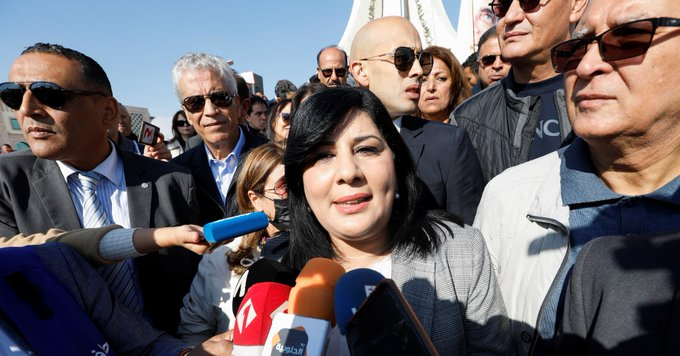
Moussi has been in custody since her October 2023 arrest outside the presidential palace, where she had reportedly gone to file legal appeals against several of Saied’s decrees. She had recently completed a separate 16-month sentence in another case also stemming from a complaint by the ISIE.
Her lawyer alleged that the court “rushed to resentence her so that she would remain in prison.”
The 2024 sentence under Decree 54 is not Moussi’s first. She was previously sentenced in August 2024 to two years in prison for spreading false information online, though that ruling was later reduced on appeal.
Moussi, once considered a potential presidential candidate, faces more serious charges as well, including accusations of attempting to alter the form of government—a reference to suspicions that she seeks to revive the authoritarian rule of former president Zine El Abidine Ben Ali, ousted during Tunisia’s 2011 revolution.

President Saied, elected in 2019, has ruled largely by decree since his power grab in 2021, dissolving parliament and jailing several high-profile political opponents. Among them is Rached Ghannouchi, leader of the Ennahdha party, who in February was sentenced to 22 years in prison for allegedly plotting against state security.
Human rights organisations, including the Tunisian League for Human Rights, have raised alarm over the broad application of Decree 54. As of January 2025, the group reports that approximately 400 individuals—including journalists, activists, and ordinary citizens—are being prosecuted under the law.
Rights advocates have condemned the decree as a tool for political repression and a serious threat to freedom of expression in Tunisia.