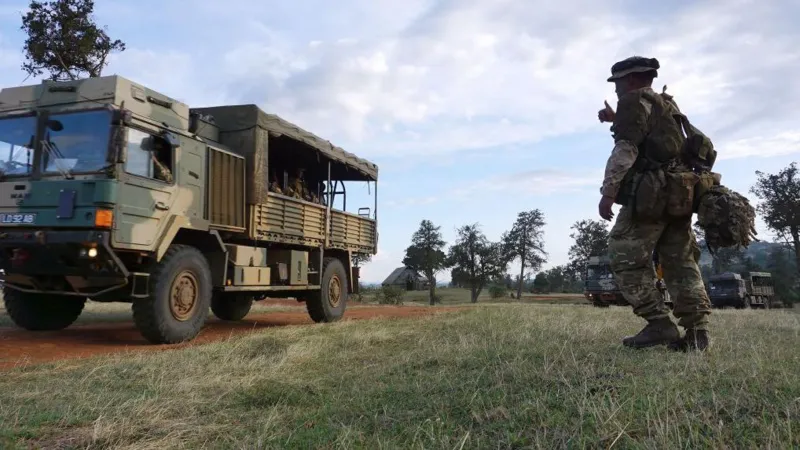
Kenya’s parliament has levelled grave accusations against British soldiers who have trained in the country for decades, alleging a long trail of sexual violence, killings, environmental damage and human rights abuses committed in communities neighbouring UK military bases.
The claims are contained in a sweeping 94-page report compiled after a two-year inquiry by the Committee on Defence, Intelligence and Foreign Relations, which gathered testimony from civilians, victims, community leaders, civil society groups, and public agencies in Laikipia and Samburu.


According to the report, residents described a pattern of assaults, fatal confrontations, maimings and unexplained deaths linked to the British Army Training Unit in Kenya (Batuk). Communities said the troops had become “an occupying presence rather than a development partner”, drawing uncomfortable parallels with colonial-era injustices. One of the most notorious cases highlighted was the 2012 killing of 21-year-old Agnes Wanjiru, whose body was discovered in a septic tank in Nanyuki after she was last seen with British soldiers.
MPs said attempts to secure justice had been obstructed for years, with accusations of interference by Batuk personnel. A former British soldier charged with her murder was arrested in the UK last month and is now fighting extradition to Kenya.
The inquiry also revisited the 2012 shooting of herder Tilam Leresh, which Kenyan MPs classified as an unlawful killing. While the UK has previously expressed regret, British prosecutors have maintained there was insufficient evidence for charges.
Parliamentarians said no meaningful accountability had been achieved in either country. Beyond these individual cases, the committee recorded what it described as widespread sexual violence against women, particularly among the Samburu and Maasai. Testimonies included assaults on women collecting firewood or tending livestock, and an especially horrific 1997 event in Archer’s Post where 30 women were allegedly gang-raped at knife-point.