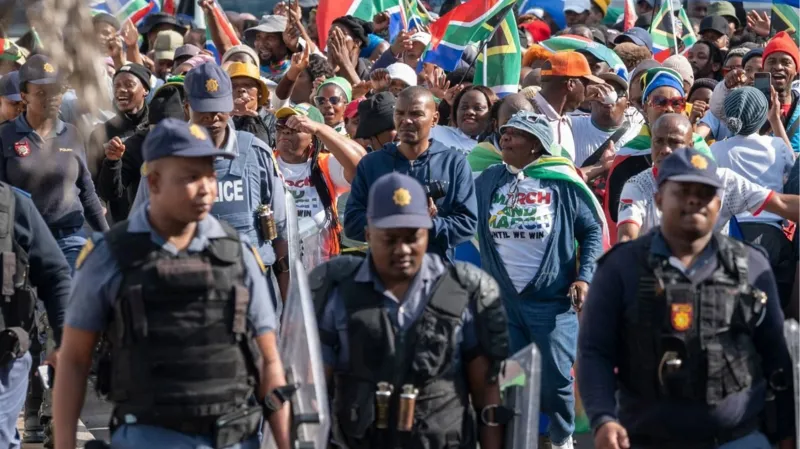
A special police task force has launched an investigation into the murder of a senior leader of the anti-migration group March and March in South Africa.
Andile Mvuyelwa Somgxada, the Gauteng provincial head of the movement, was shot in the driveway of his home east of Johannesburg earlier this month. Police confirmed he died days later in hospital.


The group says the killing was deliberate. March and March spokesperson Sandile Dube told the BBC the attack was “retaliation” for the organisation’s campaign to push undocumented migrants out of the country. He added that other leaders have received threats and warnings recently, and described the shooting as looking like a “hitman-style” attack.
Acting Police Commissioner Lt Gen Puleng Dimpane announced the formation of a multidisciplinary team to handle the case. In a statement on Tuesday evening, she said the team reflects how seriously police are taking the murder.
“We are committed to conducting a thorough investigation to establish the circumstances surrounding this murder and to ensure accountability,” Dimpane said.
The killing comes amid rising tensions over immigration in South Africa. March and March set a self-imposed deadline of 30 June for all undocumented migrants to leave, and has been holding weekly marches to press its demands. Protesters argue that undocumented migration strains public services and fuels crime.
The government says its own “migration management” drive has led to more than 53,000 foreign nationals being deported or repatriated in the past five weeks.
Dimpane also warned against vigilante actions. She said no private group has the legal right to check immigration status or force people out of communities. The warning followed an incident in Limpopo on Tuesday where five people were arrested for allegedly pretending to be immigration officers and forcing a Nigerian national, who was in the country legally, to shut his business.
Dube said March and March rejects violence and “any form of anti-law” behavior.
South Africa is home to more than 3 million documented foreign nationals, according to official figures, not including those without papers. Xenophobia has been a recurring issue in the country, which draws many migrants seeking economic opportunity.
The current protests have included reports of intimidation and looting. Several countries have responded by arranging repatriation flights. Nigeria ran a voluntary return program that ended Wednesday with a flight to Lagos carrying 306 people. More than 1,200 Nigerians have returned home under that scheme.
Official figures on undocumented migrants remain unclear, and authorities say investigations into both the murder and related acts of intimidation are ongoing.